

Finland is usually known for snow, sauna, and Santa Claus. But beneath that postcard image is a culture built on quiet trust, dry humor, and habits that surprise most first-time visitors.
From a language with no future tense to a national holiday dedicated to failure, Finnish culture is full of details rarely covered in typical travel guides. In this blog post, we will cover 15 facts about Finnish culture that go beyond the basics and show what makes this Nordic nation genuinely unique.
Key Takeaways
- Finland pioneered gender equality, becoming the first country to grant women full political rights in 1906.
- Trust runs deep in Finnish society, seen in unattended belongings and babies napping outdoors in prams.
- Nature access is a basic right, with “everyman’s rights” letting anyone roam, forage, and camp freely.
- Sauna culture goes beyond relaxation, historically used for childbirth and honored by UNESCO in 2020.
- Sisu, or quiet resilience, is the underlying mindset that connects Finland’s traditions of trust, calm, and endurance.
A Brief Overview of Finnish Culture
Finnish culture has been shaped by long winters, deep ties to nature, and a strong sense of independence. Sitting between Sweden and Russia, Finland has kept its own distinct language and identity while absorbing influences from both.
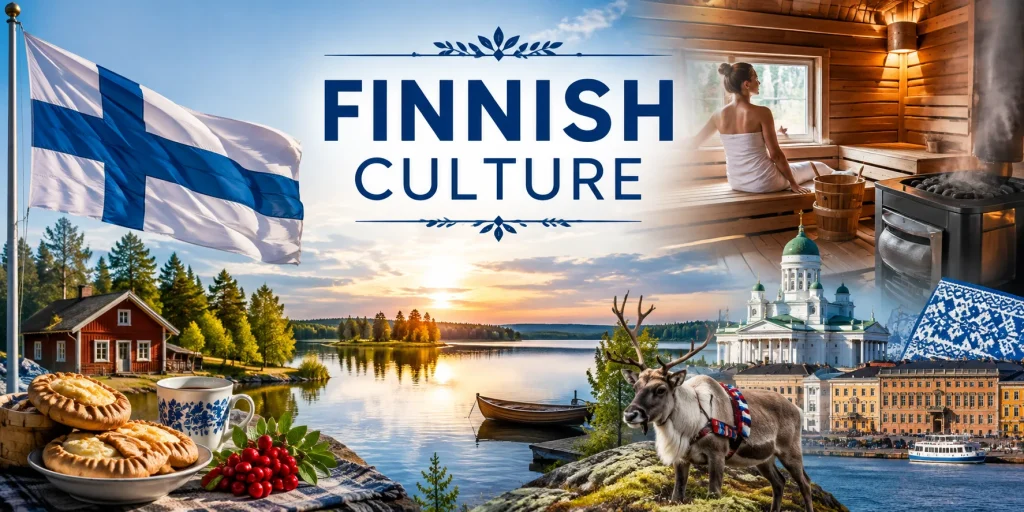
At its core, Finnish values center on equality, honesty, and trust, seen in everything from early political rights for women to the everyday habit of leaving belongings unattended in public.
Nature plays a major role too, with thousands of lakes and forests shaping a lifestyle that favors calm, unhurried living. Communication tends to be direct, and silence is treated as natural rather than awkward.
The result is a culture that may seem reserved at first but is built on quiet sincerity. The facts below take a closer look at what that means in daily life.
15 Facts About Finnish Culture
These facts move past the usual talking points and into the language, history, food, and daily habits that shape everyday life in Finland.
1. Finland Was the First Country to Give Women Full Political Rights
In 1906, Finland became the first country in the world to grant women both the right to vote and the right to run for parliament. A few countries had allowed women to vote earlier, but none gave them full eligibility to stand for office at the same time.
This early move toward equality still shapes Finnish society today, where gender equality consistently ranks among the highest in the world.
2. Finland Has a National Failure Day
Every October 13th, Finland observes Päivä joka mokataan, or National Failure Day.
The idea began with university students who wanted to normalize failure as part of learning and entrepreneurship, rather than something to hide. Instead of treating mistakes as embarrassing, Finns use the day to openly share what went wrong and what they learned from it.
This mindset reflects a broader cultural comfort with imperfection, something that stands in contrast to more performance-driven cultures elsewhere.
3. The Finnish Language Has No Future Tense
Finnish speakers do not use a separate grammatical tense for the future. Instead, context and word aspect signal whether something is happening now or will happen later.
For example, the same verb form can describe an ongoing action or a planned one, with meaning shaped by surrounding words rather than tense markers.
A few other quirks make Finnish stand out:
- No grammatical gender, so there is a single word for “he” and “she”
- Around 15 grammatical cases, compared to just a few in English
- Long compound words formed by combining smaller ones into a single term
4. Name Days Can Be a Bigger Deal Than Birthdays
In Finland, nearly every day of the year is assigned a first name, and people celebrate on the day tied to their own name. This tradition, known as nimipäivä, is often marked with small gestures like cards, flowers, or a simple “Hyvää nimipäivää” greeting from coworkers and friends.
| Occasion | Typical Celebration Style |
| Name Day | Casual, small gestures at work or with friends |
| Birthday | More personal, often celebrated at home or with close family |
While birthdays remain more personal celebrations, name days are recognized on public calendars and often acknowledged even by people who are not close friends.
5. Everyman’s Rights Let Anyone Roam, Forage, and Camp on Almost Any Land
Jokamiehenoikeudet, or “everyman’s rights,” allow anyone in Finland to walk, ski, cycle, or camp on most land, regardless of who owns it. The law also permits picking berries and mushrooms freely in forests, as long as no damage or disturbance is caused to the landowner.
There are limits. People cannot get too close to private homes, damage crops, or leave lasting harm to the land. Still, this right reflects how deeply nature access is woven into everyday Finnish life, not treated as a luxury but as a basic expectation.
6. Finns Trust Each Other to an Almost Unbelievable Degree
Public trust in Finland shows up in small, everyday moments. It is common to see unattended coat racks in libraries or universities, where people leave belongings for hours without worry. In many neighborhoods, parents leave babies napping outdoors in prams, even during winter, while they run quick errands nearby.
This level of trust is closely tied to Finland’s consistently low corruption rankings and strong social cohesion, both of which reinforce a cycle of mutual reliability.
7. Silence Is a Form of Respect, Not Awkwardness
In many cultures, a pause in conversation feels uncomfortable. In Finland, silence is simply seen as a natural part of communication. Finns generally speak when they have something meaningful to say, rather than filling gaps with small talk.
This extends to common greetings as well. Asking “how are you” in Finland is treated as a genuine question, not a passing phrase, so people often pause to give an honest answer rather than a quick, automatic reply.
8. Finland Invented Its Own Bizarre Sport Culture
Finland has sports that rarely appear anywhere else. Mölkky, a throwing game using wooden pins, and pesäpallo, a fast-paced variation of baseball, are considered national pastimes and are taught in schools across the country.
Alongside these, Finland is also known for its offbeat summer competitions:
- Wife carrying, where competitors race through an obstacle course carrying a partner
- Swamp football, played in ankle-deep mud
- Mobile phone throwing, a competition for distance rather than accuracy
These events are less about winning and more about community, humor, and the Finnish habit of not taking themselves too seriously.
9. The Sauna Is a Cultural Institution, Not Just a Spa Feature
Most people already know Finland loves saunas, but the depth of that tradition is less well known. In December 2020, Finnish sauna culture was added to UNESCO’s Intangible Cultural Heritage list, recognizing its role beyond simple relaxation.
Historically, saunas served far more serious purposes. Women once gave birth in saunas, and the bodies of the deceased were washed there as a final act of care. Today, sauna etiquette still carries meaning:
- Nudity is common and not considered sexual
- Silence is often preferred over conversation
- Water is thrown on hot stones to create löyly, or steam, as part of the ritual
10. Finns Drink More Coffee Than Anyone Else on Earth
Finland consistently ranks as the world’s highest coffee-consuming country per capita, with residents drinking several cups a day on average. Unlike many countries that favor dark roasts, Finns generally prefer lighter roasted coffee.
Coffee plays a social role as much as a functional one. It is offered during meetings, after meals, and even as part of sauna visits, making it one of the most consistent rituals in daily Finnish life.
11. Finnish Food Habits Might Surprise You
Finnish meals follow patterns that differ from many other food cultures. Breakfast is typically savory rather than sweet, with open sandwiches topped with cheese, cold cuts, or vegetables replacing sugary cereals or pastries.
A few other food traditions stand out:
- Salmiakki, a salty licorice candy that is a genuine Finnish favorite despite its polarizing taste
- Mämmi, a dark, slow-baked rye pudding traditionally eaten around Easter
- Ruisleipä, dense rye bread that appears at nearly every meal
These dishes reflect practical, ingredient-focused cooking shaped by Finland’s climate and history rather than trend-driven food culture.
12. The Midnight Sun and Polar Night Shape Daily Life
Finland’s far northern location creates extreme shifts in daylight throughout the year. During summer, especially in Lapland, the sun barely sets, a phenomenon known as the midnight sun. In winter, the same regions experience polar night, where the sun does not rise for weeks at a time.
| Season | Daylight Pattern in Northern Finland |
| Summer | Near-constant daylight for several weeks |
| Winter | Extended darkness with little to no sunrise |
To adapt, many Finns use sleep masks during summer and light therapy lamps in winter. Rather than staying indoors during the darker months, most continue outdoor activities as a normal part of their daily routine.
13. Finland Has One of the World’s Most Admired Education Systems
Finnish schools are frequently cited as a global benchmark, but the reasons are often misunderstood. Standardized testing is minimal until later school years, school days tend to be shorter, and teachers are given significant autonomy in how they run their classrooms.
Teaching itself is a highly respected profession in Finland, requiring a master’s degree and drawing competitive interest from top students. This structure focuses on long-term learning outcomes rather than frequent testing or rigid curricula.
14. The Moomins Are a Cultural Cornerstone, Not Just Cute Characters
Created by author Tove Jansson, the Moomins are far more than children’s book characters in Finland. They represent a piece of national identity, similar to how other countries treat beloved cultural icons.
Their presence goes well beyond bookshelves. Moomin World, a dedicated theme park, draws visitors year-round, and Moomin mugs are a household staple across the country. The characters have even been used in public health and safety campaigns, showing their reach into everyday Finnish communication.
15. Sisu: The Untranslatable Concept That Defines the Finnish Mindset
Sisu is often translated as courage or determination, but the concept runs deeper than a single word can capture. It describes the quiet resilience Finns rely on when facing hardship, choosing to keep going rather than give up, even when the odds are difficult.
This mindset connects many of the facts already covered. It explains why Finland created a day to normalize failure, why trust remains so strong despite life’s uncertainties, and why Finns push through the extremes of midnight sun and polar night without complaint.
Sisu is not a slogan. It is a quiet, everyday attitude that shapes how Finnish people handle life.
Conclusion
Finnish culture rewards a closer look. Beneath the sauna sessions and coffee cups lies a society built on trust, resilience, and quiet sincerity, values reflected in everything from name-day traditions to national failure celebrations.
Sisu ties it all together, showing how Finns face hardship with calm persistence rather than complaint. For travelers and curious minds alike, Finland offers a refreshing reminder that meaningful living doesn’t require noise, only intention.
Frequently Asked Questions
What makes Finnish culture unique?
Finnish culture blends deep respect for nature, strong social trust, and a preference for quiet, meaningful communication. Traditions like sauna, sisu, and everyman’s rights set it apart from many other cultures.
Why do Finns value silence in conversation?
Silence is seen as comfortable and respectful rather than awkward in Finland. People generally speak only when they have something meaningful to say.
What is sisu in Finnish culture?
Sisu refers to quiet resilience and determination in the face of difficulty. It reflects the Finnish habit of pushing through challenges without complaint.
Is it true Finland has more saunas than cars?
Finland has millions of saunas for just 5.5 million people. Exact comparisons vary, but saunas are undeniably part of everyday life there.
What is the best way to experience Finnish culture as a visitor?
Visit a public sauna, try local foods like salmiakki or rye bread, and spend time outdoors through everyman’s rights. Respecting silence and personal space also helps you connect with locals.